Lint Trap vs. Dryer Vent: Why Your West Michigan Home Needs Both Cleaned
How lint traps and dryer vents work together to keep your dryer safe
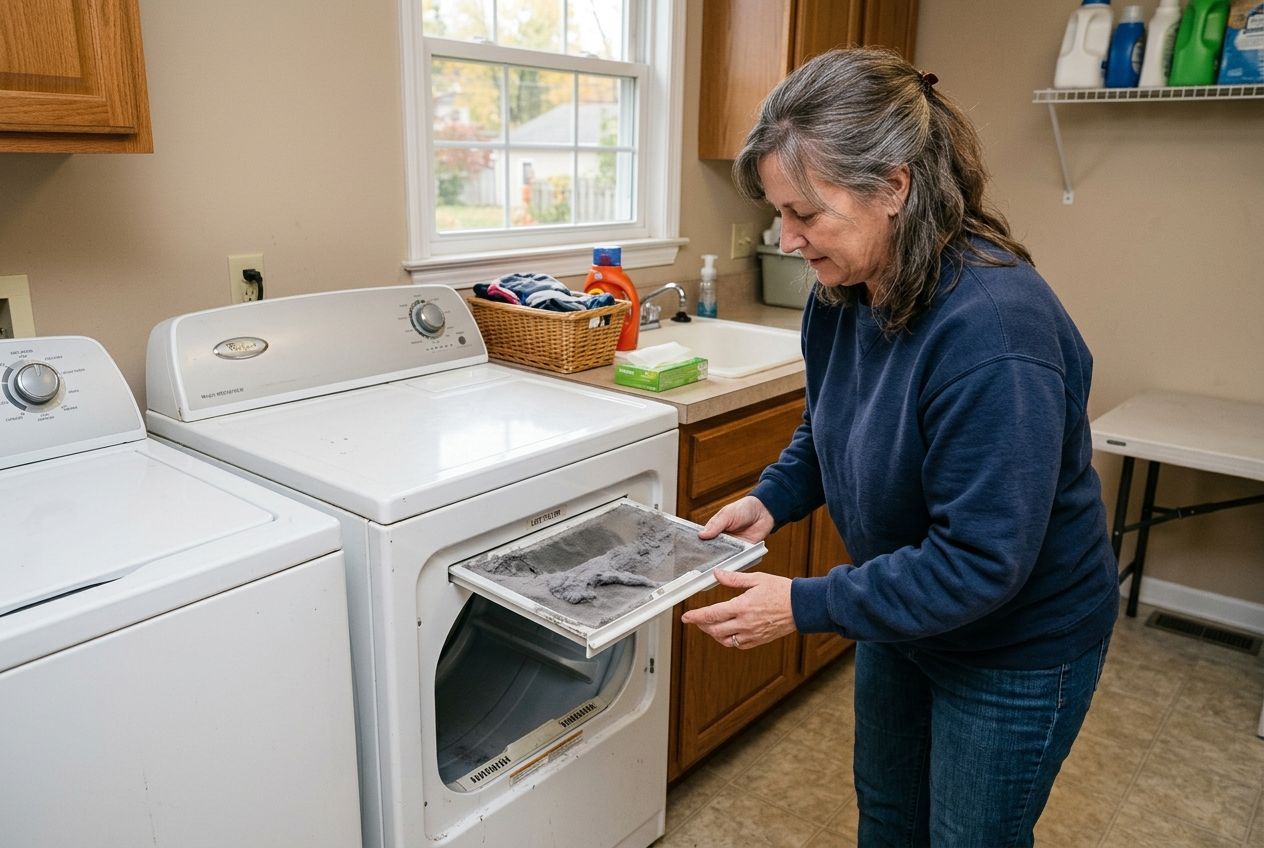
It’s common to empty the dryer’s lint screen after each load without giving it much thought. It takes a few seconds, and it feels like enough. But the lint screen is only one part of your dryer system. Behind the dryer sits the vent, and it collects lint too.
If you live in Grand Rapids or anywhere in West Michigan, here is how the two differ and why a clean lint trap does not mean a clean vent.
The Lint Trap Captures a Lot, But Not All of the Lint
That pull-out mesh filter sitting inside the dryer door — or set into the top of the unit — is the lint trap. As clothes tumble, they shed small fibers. The screen catches most of them before the air leaves the dryer.
Your job here is simple:
- Remove the lint after every load.
- Every couple of months, take the screen to the sink and clean it with warm water and a gentle dish soap. Dryer sheets and fabric softener leave a thin film that blocks airflow, even when the screen looks clean.
- Give the screen a once-over for damage; anything torn should be replaced on the spot. A blocked filter chokes airflow, forcing the dryer to run harder and drag out each cycle.
Leftover Lint Exits Through the Dryer Vent
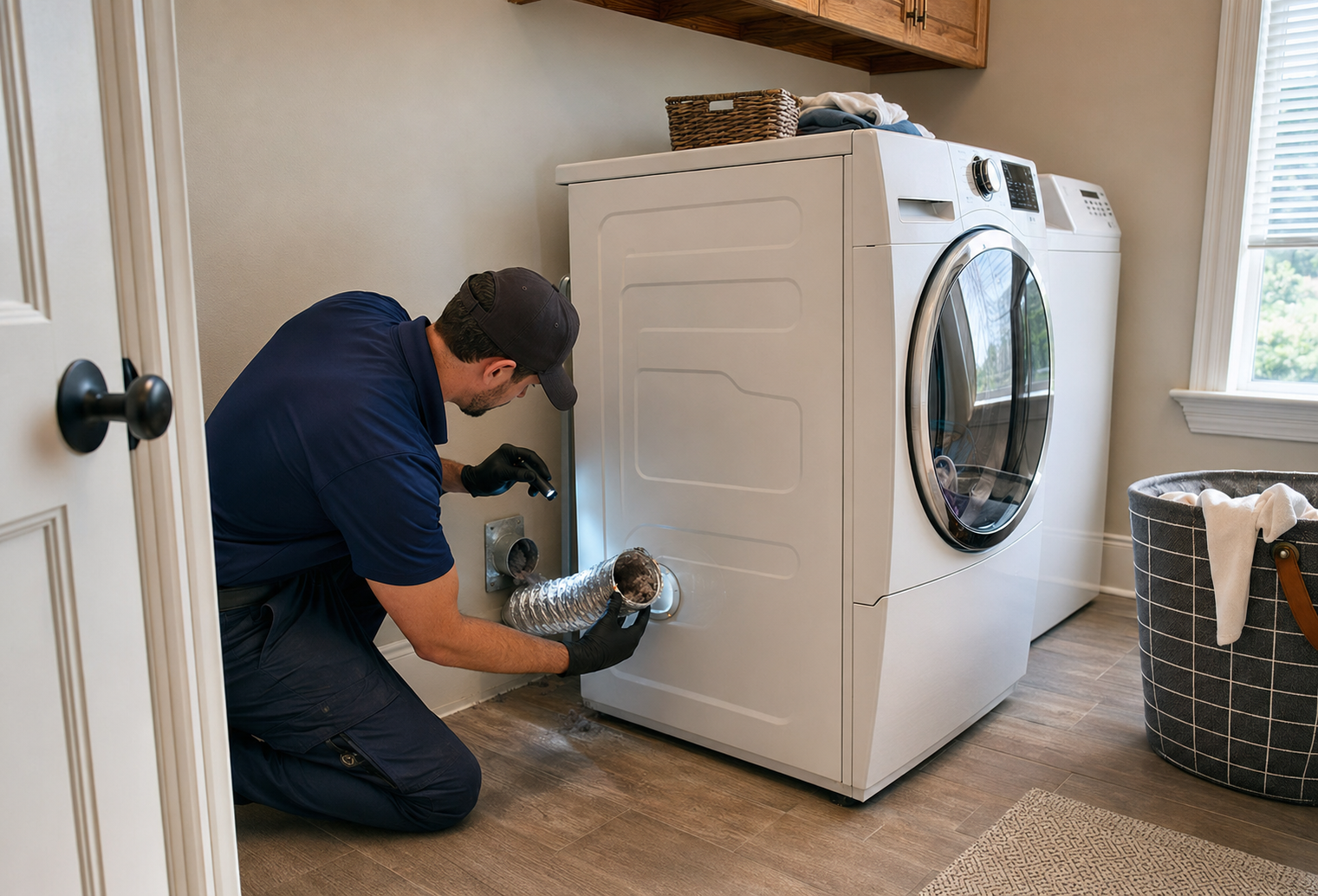
The dryer vent is the duct that moves hot, damp air from the back of your dryer to an opening on the outside of your home. Some homes have a short, straight run through the wall. Others have long ducts that bend through basements, crawl spaces, or ceilings.
No lint screen catches everything. Fine fibers slip past it and travel into the vent. Over time, they build up along the duct walls, in the bends, and at the exterior vent cover. You cannot see most of this buildup, so it often goes unnoticed until the dryer starts acting up.
Why the Difference Matters
Lint trap cleaning is a quick, everyday habit. Dryer vent cleaning is a deeper job that clears the entire exhaust path.
When the vent fills with lint, air cannot escape as it should. Heat and moisture stay trapped inside the dryer. Drying times stretch out, electricity costs creep upward, and the appliance breaks down sooner than it should.
There is also a safety issue. Lint is highly flammable. A vent packed with lint next to a hot appliance creates a fire risk.
When Your Dryer Vent Is Asking for Help
Keep an eye out for any of the following:
- Clothes come out damp and need a second run through.
- The dryer's exterior feels unusually hot to the touch.
- The laundry area turns muggy or noticeably warm during use.
- Little to no airflow comes out of the exterior vent while the machine is running.
- Lint gathers around the outdoor vent hood or piles up behind the unit.
- A scorched or burning odor shows up mid-cycle.
Should you catch that burning smell, shut the dryer down and leave it off until someone inspects the vent.
What West Michigan Weather Means for Your Vent
Our winters add a few extra concerns. During the colder months, most families dry every load indoors, so the vent gets heavy use. Snow drifts and ice can also cover the exterior vent opening and block airflow. After a heavy snowfall, clear the area around the outside vent cover.
In warmer months, birds and small animals sometimes build nests in vent openings.
How Often Should You Clean Each One?
Lint trap: After every load, with a deeper wash every few months.
Dryer vent: An annual cleaning is a good starting point for most homes. Large families who run the dryer daily, or homes with long or winding vent runs, may need it more often. If you notice any of the warning signs above, schedule a cleaning sooner.
Should You Clean the Vent Yourself?
You can handle the lint trap on your own. The vent is harder. Short, straight vents are easy to reach, but many run through walls, ceilings, or tight spaces. Store-bought brush kits can push lint deeper or miss buildup in the bends.
A professional technician uses specialized tools to clean the full length of the duct, from the dryer to the outside opening. They can also spot crushed ducts, loose connections, or damaged vent covers while they work.
Schedule Your Dryer Vent Cleaning
Keep cleaning your lint trap after every load, but do not stop there. If your dryer runs slow, feels hot, or pushes out weak airflow, it is time to have the vent checked.
Lakeshore Air Duct Cleaning provides professional dryer vent cleaning for homeowners in Grand Rapids and across West Michigan.
Get in touch with Lakeshore Air Duct Cleaning and book your service today.
You might also like